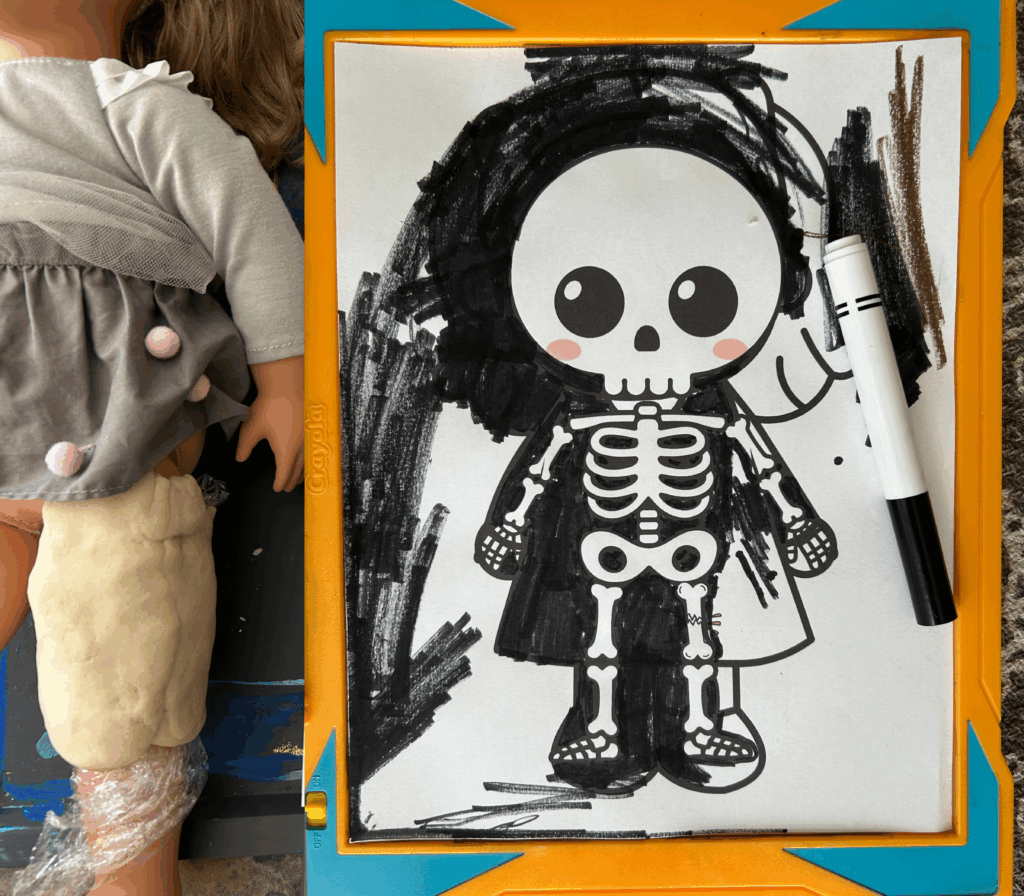
Halloween is such a convenient time to learn about the skeletal system. As we explored something new about bones, I could illustrate the idea or we could test our knowledge using the decorations around us.
What Are Bones?
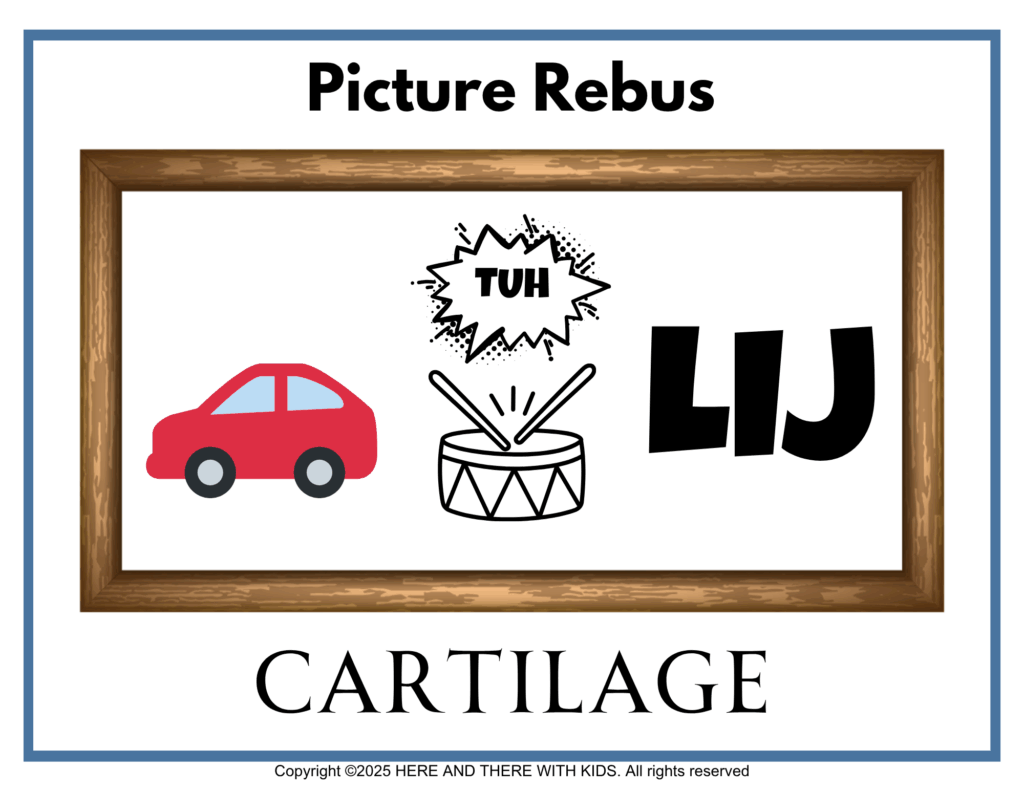
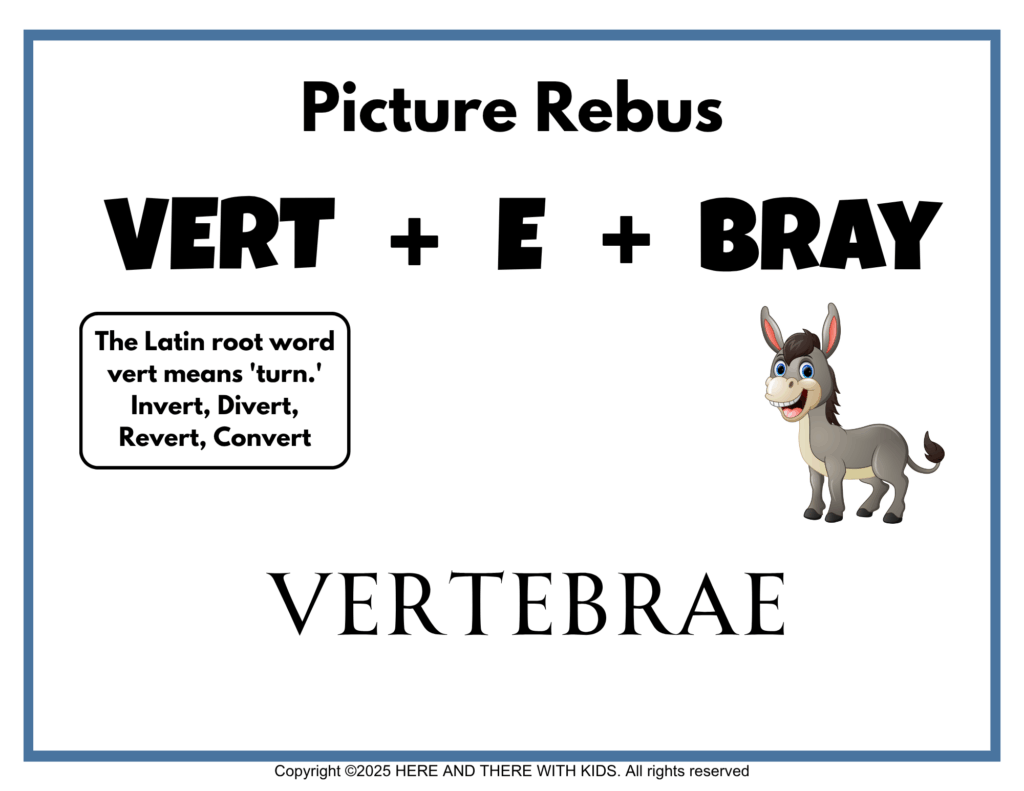
Bones are hard structures that form the framework of our bodies. All of our bones connect to make a frame called the skeleton. Without a skeleton, our bodies would be soft and floppy. The skeleton holds everything up, giving your body structure, support, and shape. Bones also protect important organs and, together with muscles, help your body move. Each bone in the skeleton has its own scientific name—most of them come from Latin so that doctors and scientists around the world can use the same terms. We even tried learning a few of these names using rebuses.
Creating bone-shaped breadsticks and sugar cookies made the learning process more fun and effective.
We found out that when we are babies, we have more than 300 bones. As we grow, many of these bones fuse together. By around age 25, our bones are fully formed, leaving us with 206 bones in the adult skeleton. More than half of these are found in the hands and feet—the parts of the body that perform the most complex movements.
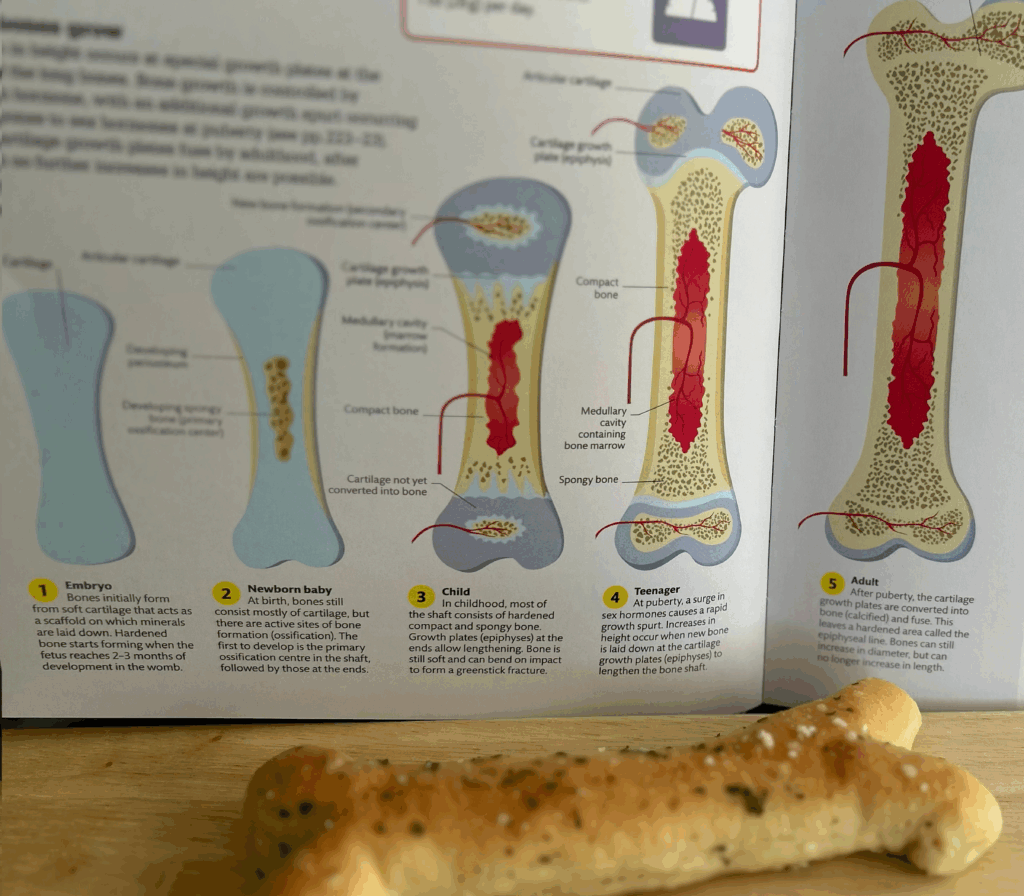
A baby’s bones start out as soft, flexible material called cartilage. As we get older, this cartilage slowly hardens and turns into bone. Some parts of our body, like the tip of the nose, the outer ears, and the spots where the ribs connect to the breastbone, remain made of cartilage.
We learnt that the spine is made up of 24 bones called vertebrae. Each vertebra has a strong outer layer and a hollow center that allows the spinal cord to pass through. Our spine bends, twists, and turns every time we move. Between each vertebra are small discs of cartilage that act like cushions, preventing the bones from rubbing together. If one of these discs becomes squeezed or slips out of place, it can press on nearby nerves and cause pain.
Throughout the day, the discs in our spine get slightly compressed as we stand, walk, and move around. When we rest at night, they expand again—making us just a little taller in the morning than in the evening. We tested this by measuring my daughter first thing in the morning and again at night—and sure enough, she was a bit shorter by bedtime.
Bone structure
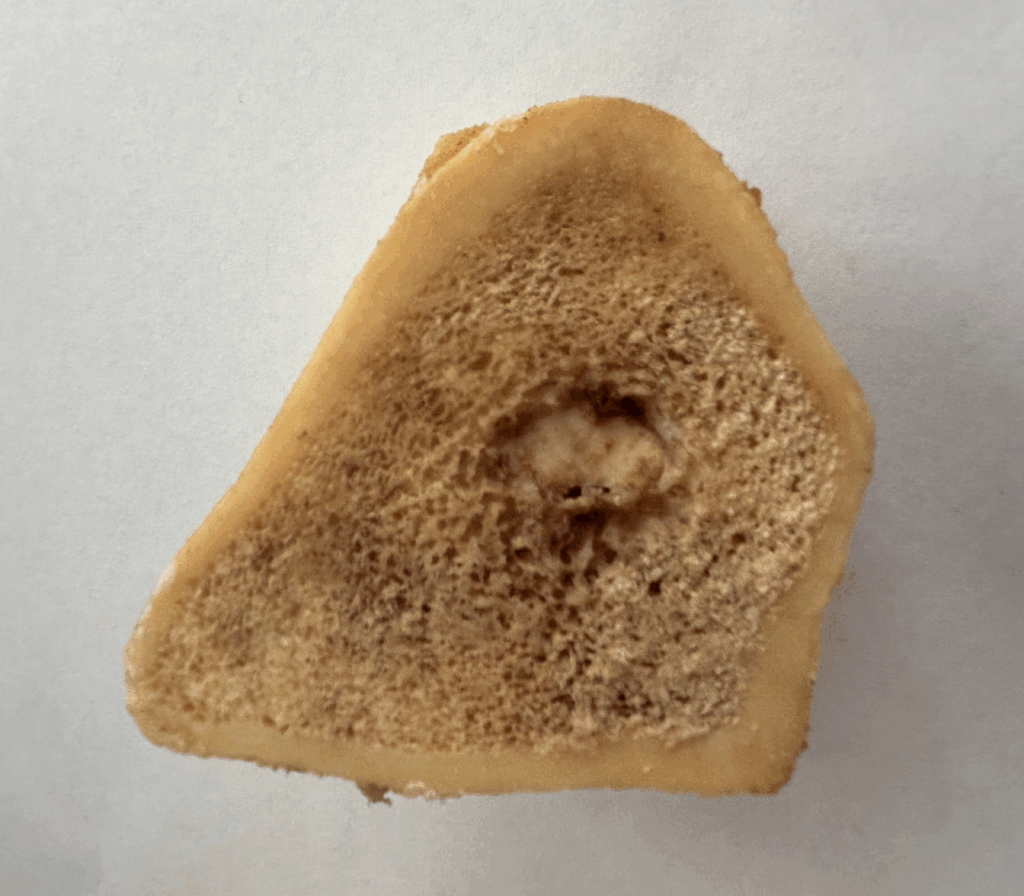
Bones make up about one-sixth of our body weight. Their cylinder-like shape isn’t accidental—cylinders are naturally strong. Beneath the hard outer layer, bones have a honeycomb-like structure with many small spaces. If bones were completely solid, our skeleton would be much heavier, making it harder to run, jump, and move. The combination of their shape and internal structure makes bones both strong and lightweight at the same time.
We used some soup bones to observe the structure of a cow’s bones.
Bones are made of living cells and hardened minerals like calcium and phosphorus. Blood delivers minerals from our food to the bone cells. The hardest and most dense part of a bone is its outer layer, which is made of calcium. We get calcium from the food we eat. Beneath this membrane are blood vessels and nerves that travel through canals inside the bone, bringing nutrients and oxygen to the cells and carrying away waste and extra minerals.
Many large bones also contain a jelly-like substance called bone marrow. Marrow is found in certain bones, such as the spine, skull, and the main bones of the arms and legs. Red, white blood cells, and platelets are produced in the bone marrow, supplying the body with about 3 million new cells every second.
To demonstrate bone marrow, we took some of our “breadstick bones,” hollowed out the center using a wide straw, and filled them with cream cheese.
Moving joints
Wherever bones meet, they form joints that allow movement. The ends of these bones—especially in the arms and legs—are covered with smooth cartilage and lubricated with a special fluid so they can glide easily.
Plane (or gliding) joints – bones slide over one another, found in the wrists and ankles.
Hinge joints – allow bending and straightening, like in the knees, elbows, and fingers.
Ball-and-socket joints – one bone fits into another, allowing movement in all directions, found in the shoulders and hips.
Pivot joints – one bone rotates around another, such as where the skull connects to the neck.
Saddle joints – allow movement in two directions, like in the thumbs.
Ellipsoid joints – allow movement without rotation, found at the base of the fingers and the jaw.
Broken bones
Bones are strong and flexible, able to handle a lot of pressure—but sometimes they can still break. Doctors use X-rays to see broken bones. X-rays can pass through most parts of the body but are blocked by bones, creating a clear picture of their shape and condition.
When a bone breaks, the doctor carefully lines up the pieces and keeps them in place with a cast. New cells then grow at each end of the break, gradually closing the gap. This healing process usually takes several weeks.
We did a pretend play where our doll, Tina, had to visit the doctor because her leg hurt. We made an “X-ray” and discovered that her left femur was fractured. Then we made a cast for her and told her she shouldn’t put weight on that leg for several weeks.
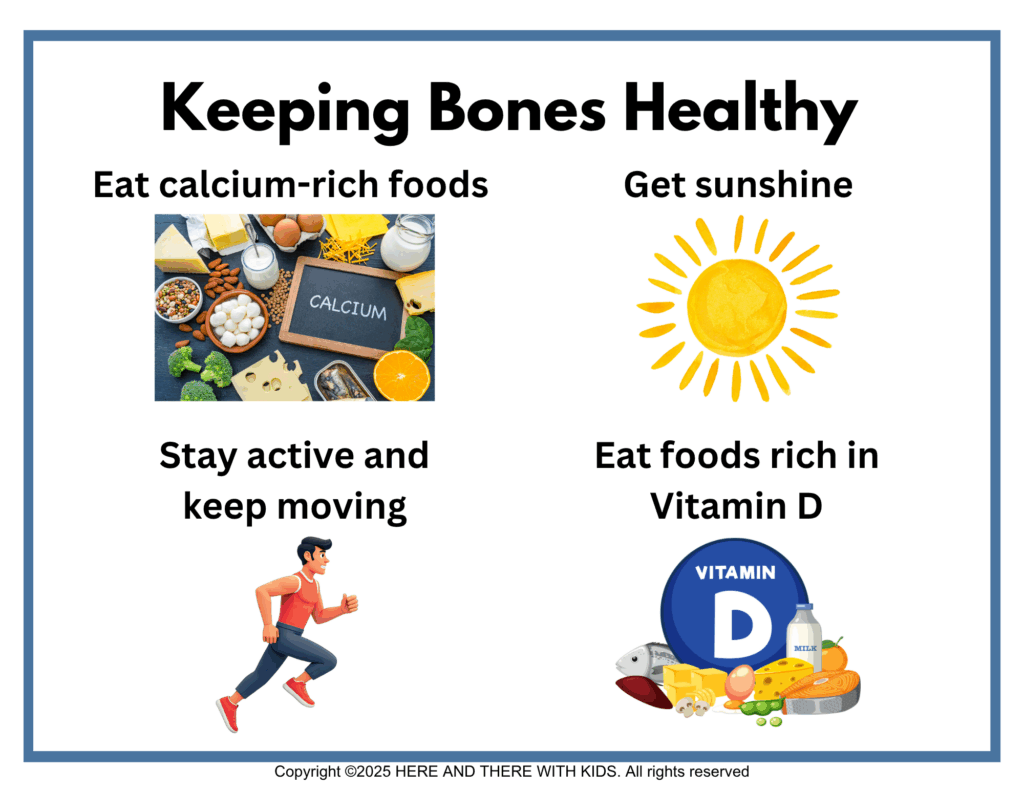
Keeping Bones Healthy
As bones grow, they need minerals like calcium and phosphorus to lengthen, thicken, and strengthen. Vitamins C and D also help keep bones healthy. Weight-bearing activities—such as walking, climbing, or skating—make bones stronger.
Fun facts
We learned the following fun facts about bones:
The smallest bone in the human body is the stapes, located inside the ear. It’s about the same size and length as a grain of rice.
The tailbone is located at the very bottom of your spine. It’s a small, bony structure that helps support and protect the lower part of your body.
The seven bones in your neck are the same number that a giraffe has. The top bone allows you to move your head up and down, while the second one lets you turn it from side to side.
The elbow is called the “funny bone” because when you bump it, you hit a nerve inside that sends a tingling, electric shock–like feeling down your arm.
Speaking of Halloween, there was a study done some time ago that found a connection between eating more milk chocolate and having lower bone density. Daily milk chocolate eaters had less dense bones than people who enjoyed it just once a week or less.