Learning about Massachusetts
Our family did some genealogy, and we found out that some of our ancestors lived in Boston, Massachusetts. It was interesting to learn more about the state where part of our family lived in the 17th century.
How did it get that name?
The name “Massachusetts” comes from the Massachusett people, an Indigenous tribe native to the area. Their name translates to “near the great hill,” a reference to the Blue Hills found southwest of modern-day Boston.
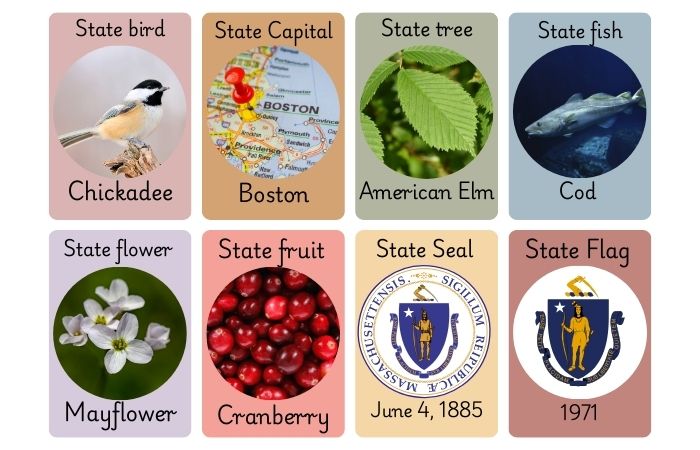
The state’s nickname, “the Bay State,” may come from its numerous natural bays, or it could be a reference to the Massachusetts Bay Company, which received a royal charter to settle the region.
GEOGRAPHY
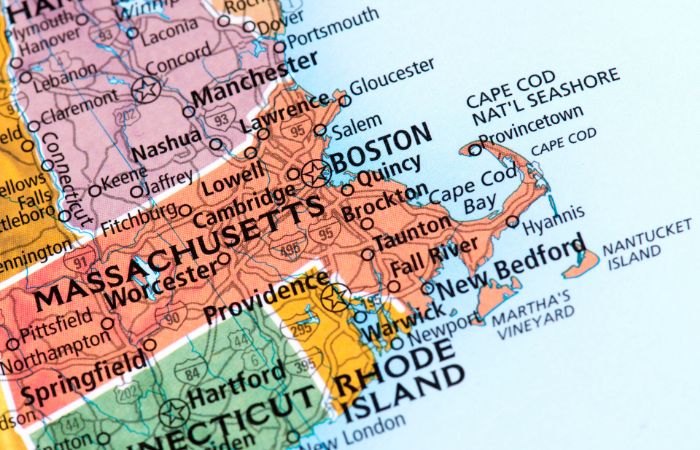
The state’s distinctive “hook-shaped” eastern coastline was formed by glaciers that carved out rocky bays, creating what is known as the Coastal Lowland—home to Cape Cod Bay, Martha’s Vineyard, and the Nantucket Islands, all popular for fishing, boating, and relaxing vacations. Central Massachusetts is marked by streams, plains, and gentle hills, while the terrain grows more mountainous toward the west. Farther west lie the Taconic Mountains. The Taconic Range and Berkshire Mountains are part of the Appalachian Mountains.
WILDLIFE
Massachusetts has many kinds of plants and animals. Black bears, bobcats, coyotes, moose, and white-tailed deer live in its forests, and birds like bald eagles, wild turkeys, cardinals, blue jays, mourning doves, and robins are common across the state.
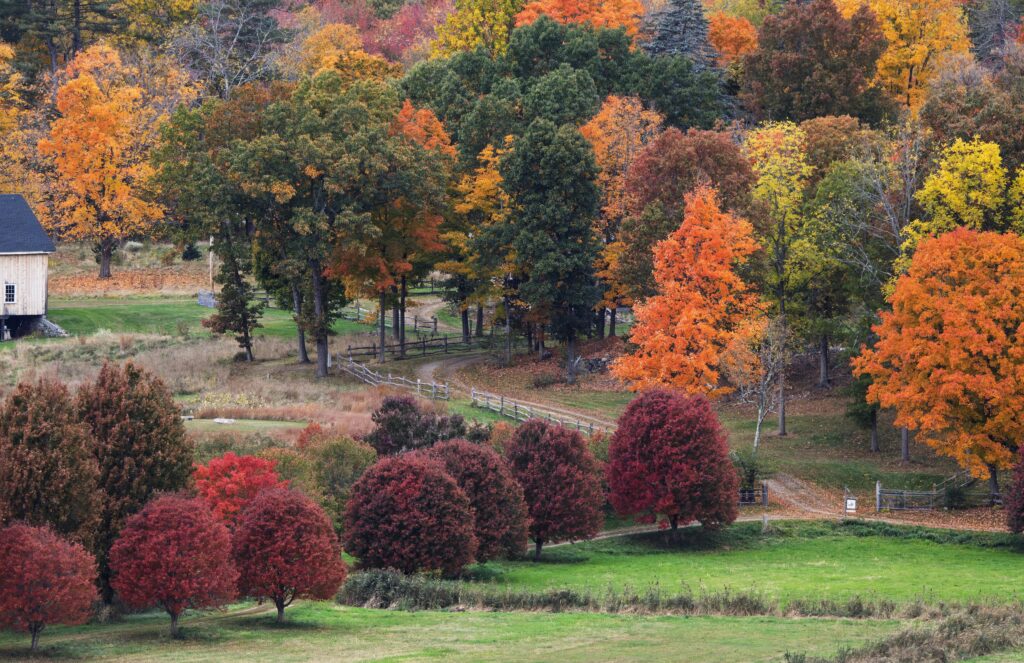
The state’s forests grow sugar maples, eastern white pines, sycamores, and American elms—the state tree.
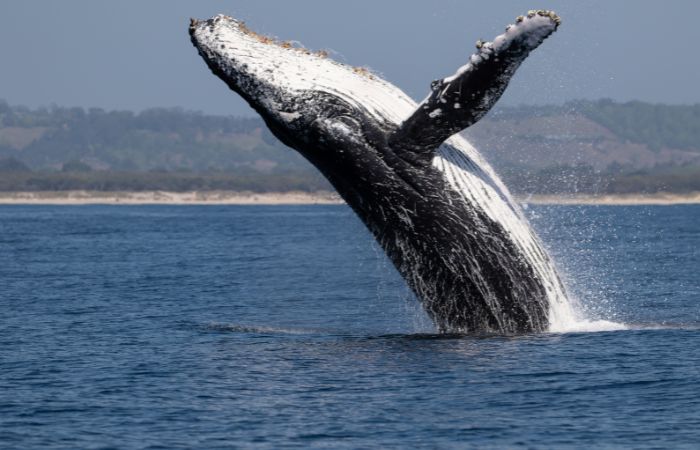
Atlantic cod is the official state fish, and the coastal waters of Massachusetts are home to a variety of marine mammals, including seals and dolphins. Stellwagen Bank National Marine Sanctuary is a protected marine area located off the coast of Massachusetts, between Cape Ann and Cape Cod. It’s one of the best whale-watching destinations in the world, known for its rich feeding grounds that attract humpback, fin, minke, and even the endangered North Atlantic right whales.
NATURAL RESOURCES
Massachusetts is rich in natural resources that have supported both its economy and way of life. The state’s coastal waters provide abundant seafood, including cod, clams, scallops, and lobsters, which have been central to its fishing industry for centuries. Forests cover much of the inland areas, supplying timber and supporting wildlife habitats, while rivers and streams offer freshwater resources and opportunities for hydroelectric power. Additionally, Massachusetts has mineral resources such as granite, sand, and gravel, which are used in construction and infrastructure projects.
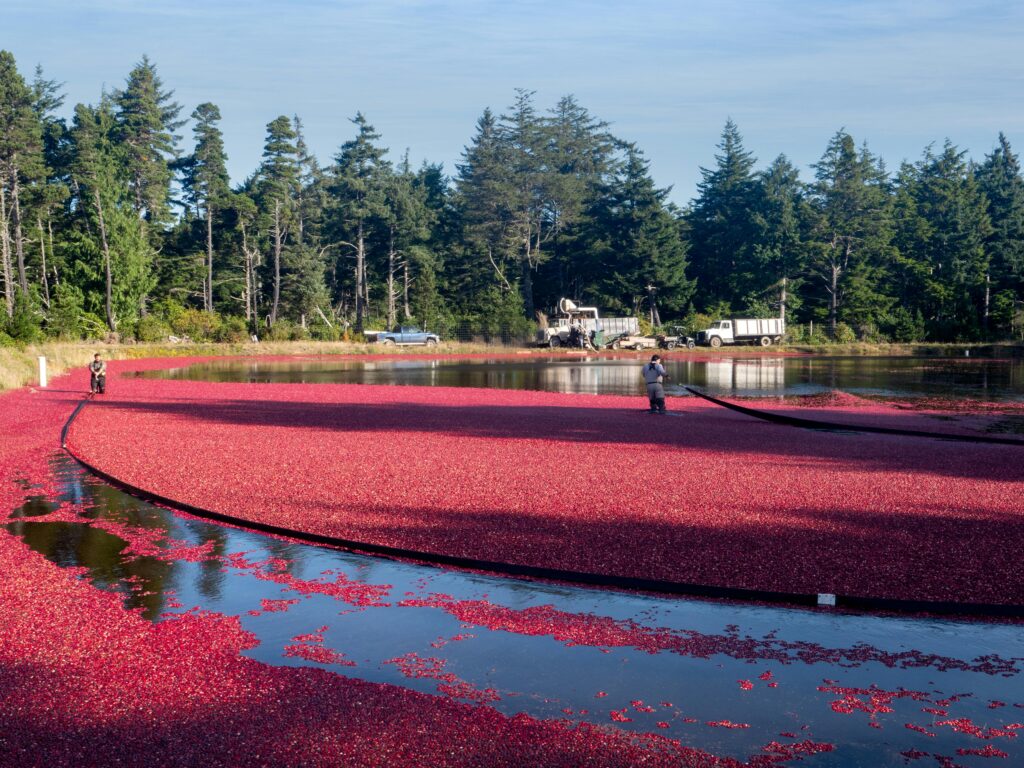
Local farmers produce about a quarter of the United States’ cranberries, and the town of Wareham celebrates this harvest each year with a cranberry festival. You’d be surprised how many things you can make with cranberries. The cranberry, the state fruit, is one of three widely cultivated fruits native to North America, along with blueberries and Concord grapes, both of which are also grown in Massachusetts.
INDUSTRIES
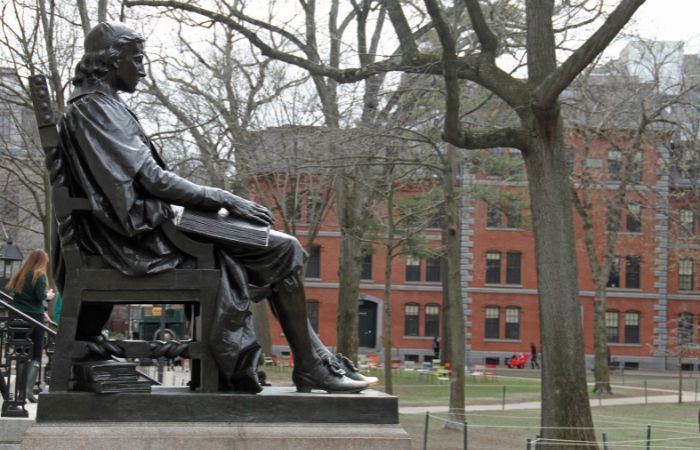
Massachusetts has a diverse economy that relies on technology, education, tourism, manufacturing, and fishing. The medical and health care sector is a major force in the Massachusetts economy, driven both by its world-class patient care facilities and its thriving biotechnology and life sciences industry. The Boston area is home to many high-tech companies focused on research and development, while the state’s renowned colleges and universities—including Harvard, MIT, and Tufts—employ large numbers of teachers and administrators.
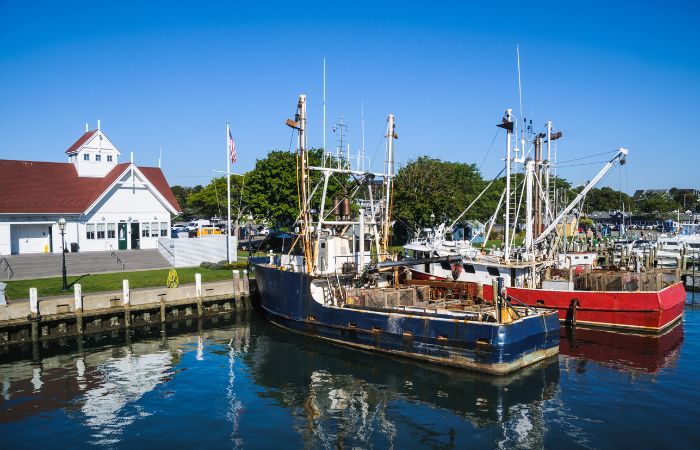
Manufacturing remains important, producing industrial machinery, electronic equipment, medical supplies, and computer parts. Massachusetts’ fishing industry is strong, with lobsters, clams, cod, herring, crabs, and scallops harvested along the coast—New Bedford alone provides half of the scallops sold in the United States.
SPORTS
Massachusetts is home to iconic professional teams such as the Boston Red Sox, Celtics, Bruins, and New England Patriots, and it holds a special place in sports history as the birthplace of both basketball and volleyball.
One of our favorite games, basketball, was invented in 1891 in Springfield, Massachusetts, by James Naismith. Interestingly, during a harsh winter blizzard, students at Springfield College (then the YMCA Training School) were restless and unable to participate in outdoor activities. To keep them active, Naismith created a new game inspired by elements of American and English rugby, lacrosse, soccer, and a childhood game called “duck on a rock.” The first version used a soccer ball and two peach baskets nailed to the gym balcony. Just a few weeks after its creation, students introduced the game at their local YMCAs across the country, helping it spread rapidly.
Just a few years later, in 1895, volleyball was created in Holyoke, Massachusetts, by William G. Morgan, another YMCA person. Hoping to offer older members a less strenuous alternative to basketball, he blended elements of tennis, handball, and baseball to develop a new game he called “Mintonette.” After watching the players volley the ball back and forth, a spectator suggested renaming it “volleyball,” and the new name quickly caught on.
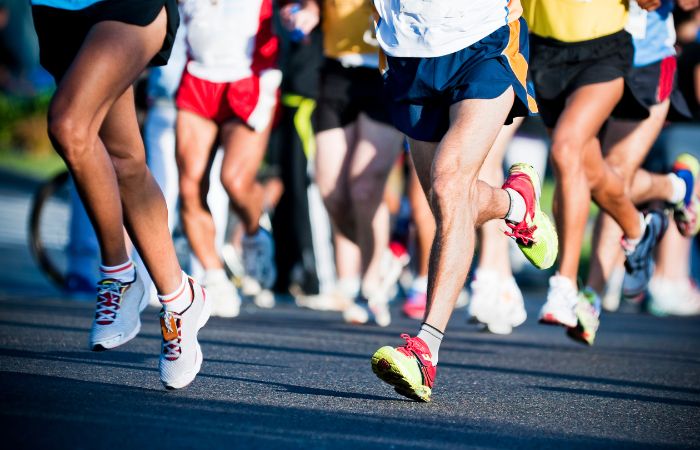
Also the Boston Marathon, held annually on Patriots’ Day, is the world’s oldest continuously run marathon and one of the most prestigious road races in the world. Established in 1897, it draws runners from across the globe.
HISTORY
Native Americans lived in Massachusetts for thousands of years before Europeans arrived. The Wampanoag lived in parts of present-day Massachusetts, Rhode Island, and nearby islands and were the first to meet the Pilgrims. The Pilgrims, Separatist Puritans who came on the Mayflower in 1620, founded Plymouth Colony. Later, other Puritans founded the larger Massachusetts Bay Colony.
The Wampanoag, led by Massasoit, helped the Pilgrims survive and made a peace treaty that lasted 40 years. After Massasoit’s death, colonists took more land and tensions grew.
By the seventeenth century, Massachusetts had become a major shipbuilding center. Its ships traveled from the East Coast to ports around the world, bringing back valuable goods. The colony also played a key role in the molasses–rum–slave trade. Merchants imported molasses from the West Indies and distilled it into rum, which they shipped to West Africa. There, the rum was traded for enslaved people, who were transported to the West Indies and sold to plantation owners. Those plantations used enslaved labor to produce more molasses, which was then sent north to begin the cycle again.
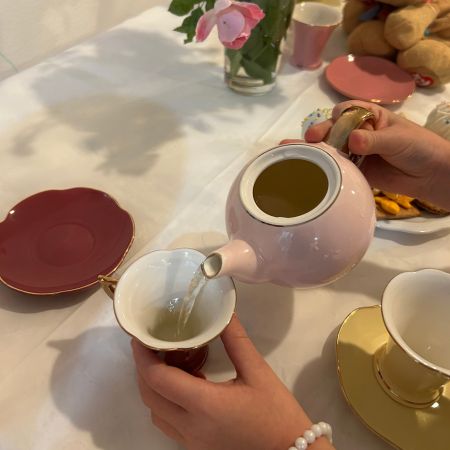
In 1691 Plymouth Colony merged with Massachusetts Bay. By the 1700s Massachusetts was a busy trading center, and colonists grew frustrated with British taxes. Tensions rose in 1770 when British soldiers killed five colonists in the event later called the Boston Massacre. Three years later, colonists dumped tea into Boston Harbor to protest high British taxes, an act now known as the Boston Tea Party. As we learned about the Boston Tea Party, we set the table with small tea cups and snacks, then reenacted how the colonists dumped tea into the harbor using tea packets from the grocery store.
In 1775 the first battles of the Revolutionary War—Lexington and Concord—took place in Massachusetts. After the war, the colonies won independence, and in 1788 Massachusetts became the sixth state to approve the U.S. Constitution.
The economy struggled after the Revolution but revived after new textile mills opened in Lowell following the War of 1812. Massachusetts became a center of the Industrial Revolution and a hub for literature, the arts, science, and reform. The state opposed slavery and fought for the Union in the Civil War.
In the 1900s the textile and shoe industries left, causing decline, but the rise of electronics, communications, and high-tech industries after World War II revived the economy.
The Great Molasses Flood
If you ever visit Boston’s North End, there is a small plaque near the harbor that commemorates the Great Molasses Flood. Remember how we learned that Boston was part of the molasses and rum trade? Because of that, large amounts of molasses were stored in the city. On January 15, 1919, in Boston’s North End, a five-story-high metal storage tank holding more than two million gallons of molasses suddenly burst, sending a massive wave of thick, sticky syrup rushing through the streets. The 40-foot wave reached speeds of up to 35 miles per hour, destroying buildings, knocking over railcars, and trapping people and animals. Twenty-one people were killed and many others were injured.
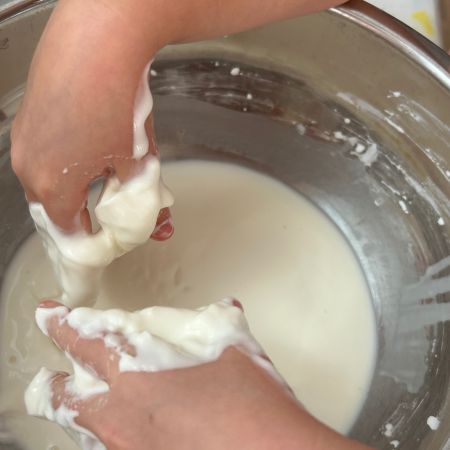
We also learned that molasses is a non-Newtonian fluid because its viscosity changes depending on the force applied to it. Because it is so dense, swimming in it is nearly impossible, and once it thickened, it became even harder to escape the sticky mass. To demonstrate this, we did an experiment with a non-Newtonian fluid called Oobleck.
FAMOUS PEOPLE FROM MASSACHUSETTS
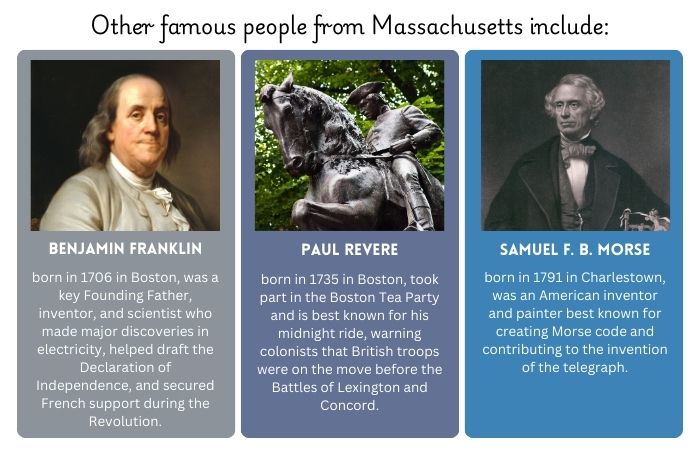
Speaking of Oobleck. We were excited to discover that two of our favorite children’s book authors were born in Massachusetts: Dr. Seuss (Theodor Seuss Geisel), born in 1904 in Springfield, and Richard Scarry, born in 1919 in Boston.
FOOD
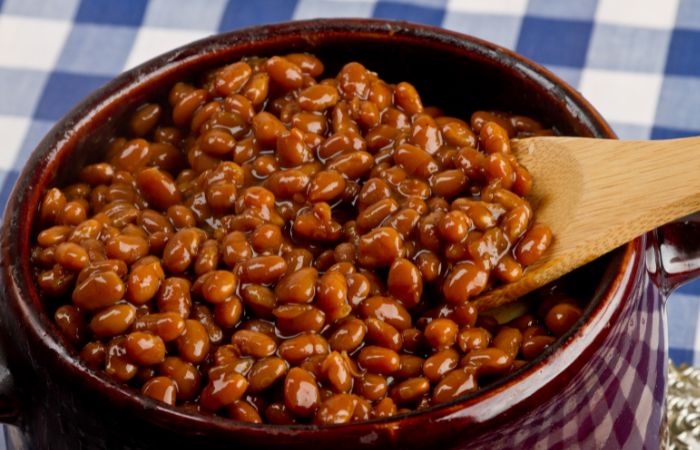
Boston earned the nickname “Beantown” for its famous baked beans, a dish that stews navy beans with molasses and bacon. The recipe has roots in the practices of the Algonquin people, who taught colonists to grow beans and prepared them by slow-cooking in deer hides with maple syrup and bear fat. Bostonians adapted the dish, using salt pork and molasses instead. To observe the Puritan tradition of resting on Sundays, families would mix the beans on Saturday morning, then carry the stoneware crocks to neighborhood brick-oven bakeries, where the beans would slowly cook all day and be ready to eat on Sunday.
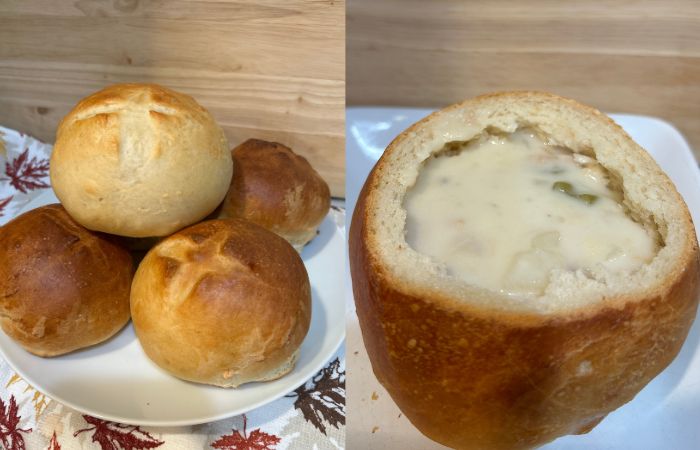
Settlers in the 17th century also created New England clam chowder using local ingredients like clams, potatoes, onions, and salt pork, producing a hearty dish to sustain them through harsh winters. Over time, it evolved into the rich, milk- or cream-based chowder that is now a staple of Boston cuisine.
Boston also has its own iconic dessert: Boston cream pie, a custard-filled yellow cake topped with chocolate. Created by a French chef at the Omni Hotel in Boston, it was called a “pie” because pie tins were more common than cake pans at the time.
We made homemade bread bowls, clam chowder, baked beans, and a Boston cream pie at home.
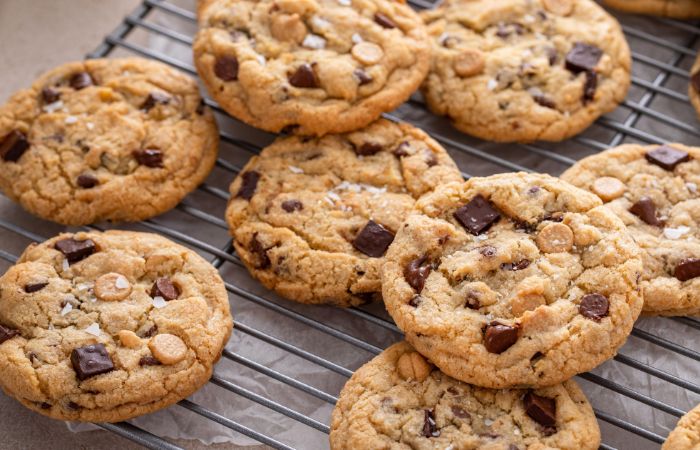
The chocolate chip cookie was invented in the 1930s by Ruth Wakefield, who ran the Toll House Inn in Whitman, Massachusetts. While making butter cookies, she added chopped Nestlé semisweet chocolate, expecting it to melt, but the pieces held their shape and created soft chocolate pockets. The cookie became popular, and Nestlé made a deal with Wakefield: they printed her recipe on their packaging in exchange for giving her a lifetime supply of chocolate.
INTERESTING FACTS ABOUT MASSACHUSETTS
- Webster, Massachusetts, is home to a lake most people know as Webster Lake, but its official name is much longer: Lake Chargoggagoggmanchauggagoggchaubunagungamaugg. The name comes from an Algonquian word that roughly translates to “Englishmen and Nipmuck Indians at the boundary or neutral fishing place.”
- In 1839 in Woburn, Charles Goodyear accidentally dropped a mixture of India rubber and sulfur onto a hot stove, discovering the process of vulcanization. This breakthrough made the commercial use of rubber possible. In 1898, Frank Seiberling founded the Goodyear Tire & Rubber Company, naming it in Goodyear’s honor.
- The microwave oven was invented in 1945 in Massachusetts. While working with a magnetron for radar technology, Percy Spencer noticed that microwaves could generate heat when they melted a candy bar in his pocket.
- If you are into mermaids, Cape Cod is the place to visit. The region’s mermaid folklore includes stories from Native American tribes, local artists, and general maritime legends. The Wampanoag and Nauset peoples have their own mermaid stories.
- Salem, Massachusetts, is known for the witch hunts, a series of trials from 1692 to 1693 in which people were accused of practicing witchcraft.
- The first telephone call in history was made in Boston on March 10, 1876. Alexander Graham Bell, the inventor of the telephone, spoke to his assistant Thomas Watson in the next room. Bell’s telephone company later grew into what became AT&T company.
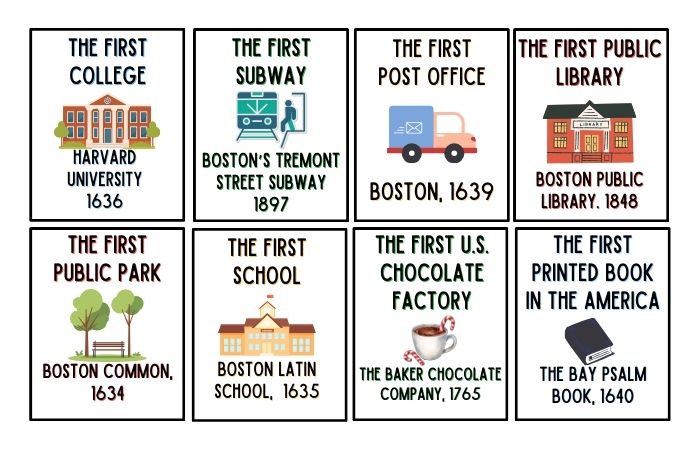
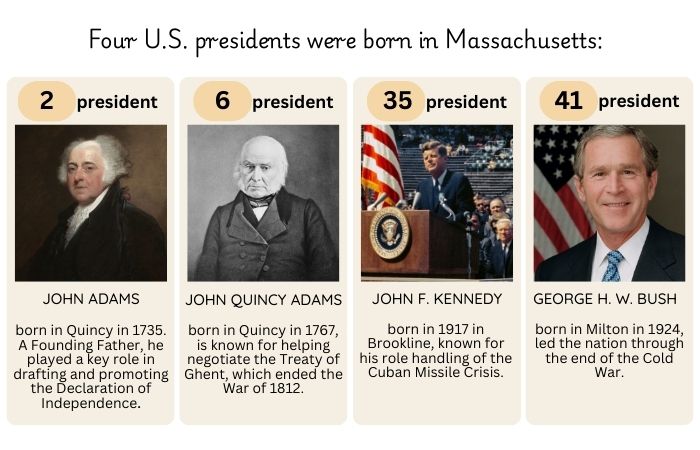
Here are some more famous “firsts in US” that happened in Massachusetts: