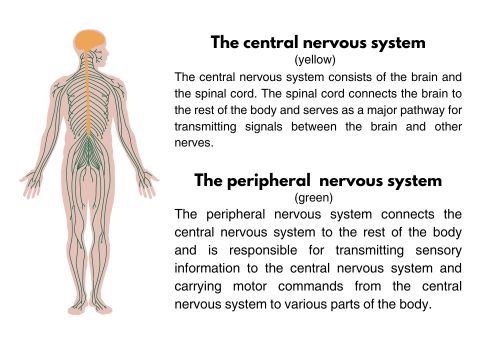
The nervous system is a complex network of cells and tissues that coordinates and controls the body’s functions and responses to external stimuli. It serves as the control center for our entire body, enabling us to think, learn, move, and remember. The nervous system consists of the central nervous system: the brain and spinal cord, and the peripheral nervous system: sensory receptors, nerves, and supporting cells.
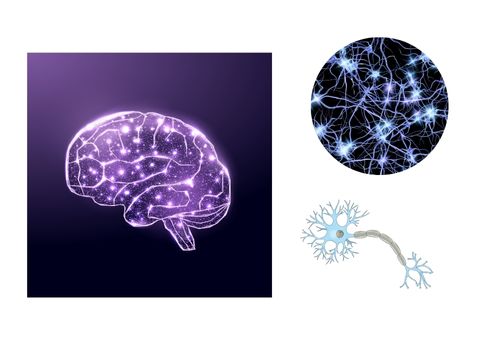
The brain is responsible for processing sensory information, controlling movement, regulating bodily functions, and governing higher cognitive functions such as thinking, memory, and emotion. There are about 100 billion nerve cells in the brain. See more about the brain in the “Learning about the brain” post.
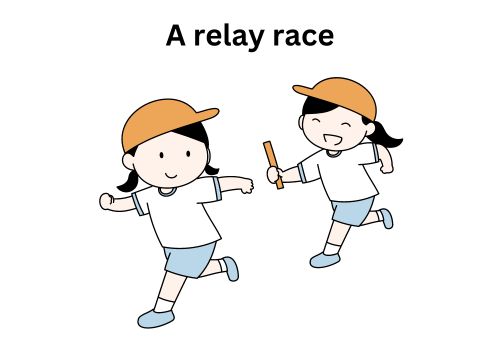
The nervous system works by transmitting electrical and chemical signals throughout the body to coordinate and control its functions. It is a network of nerve cells (also called neurons) and supporting cells that communicate information between different parts of the body. The nervous system can be compared to a complex mail delivery system or a relay race where one nerve cell transmits information to another and it goes all the way to the brain.
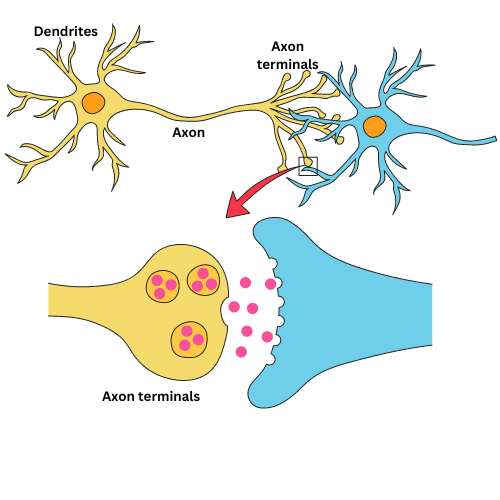
A neuron consists of the cell body, dendrites, axon, and axon terminals.
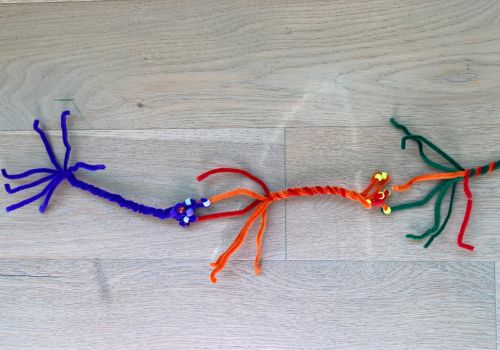
To illustrate the neuron structure my daughter and I made several neurons out of pipe cleaners. We put some beads at the end of axon terminals to pretend that these are the chemicals that are released when the electrical signal reaches axon terminals.
I tried to simplify the explanation of how neurons work for my daughter:
Neurons receive signals through their dendrites from other neurons or sensory receptors. Then the signal travels along an axon in the form of an electrical signal. When the signal reaches axon terminals at the end of the neuron it triggers the release of chemical messengers, which are caught by the dendrite of another neuron.
To illustrate the principle of how the signal is transmitted through a neuron we created a neuron model based on the tutorial below:
There is another amazing idea for how to explain the neuron principle to children. The model below involves more children and requires a little bit more preparation.
There are different types of neurons:
Sensory neurons carry information about touch, temperature, pain, pressure, and other sensations from the skin and muscles throughout the body to the brain.
Motor neurons initiate voluntary movements like walking and writing, as well as involuntary movements such as heartbeats and digestion.
Interneurons transmit messages between neurons.
We enjoyed watching the cartoon below and learning about different types of nerve cells and how they are interconnected.